Taking over the Pedalbox
The Idea
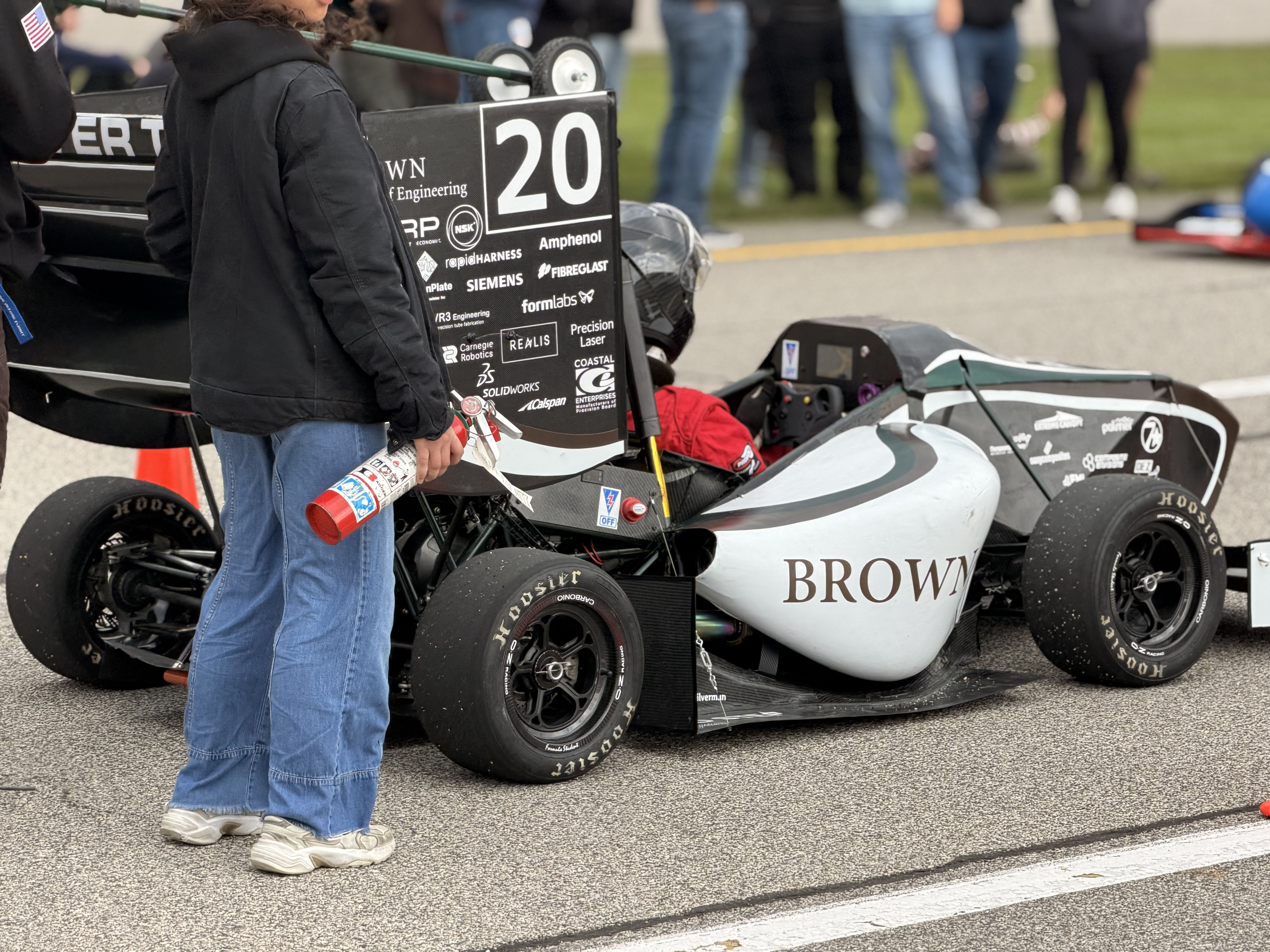
Formula SAE is a competition where university teams design, build, and race their own formula-style car. Our team, Brown Formula Racing, has been competing for over 20 years, and I joined the team in my freshman year. Our team splits the car into subsystems, such as suspension, chassis, powertrain, and the pedalbox.
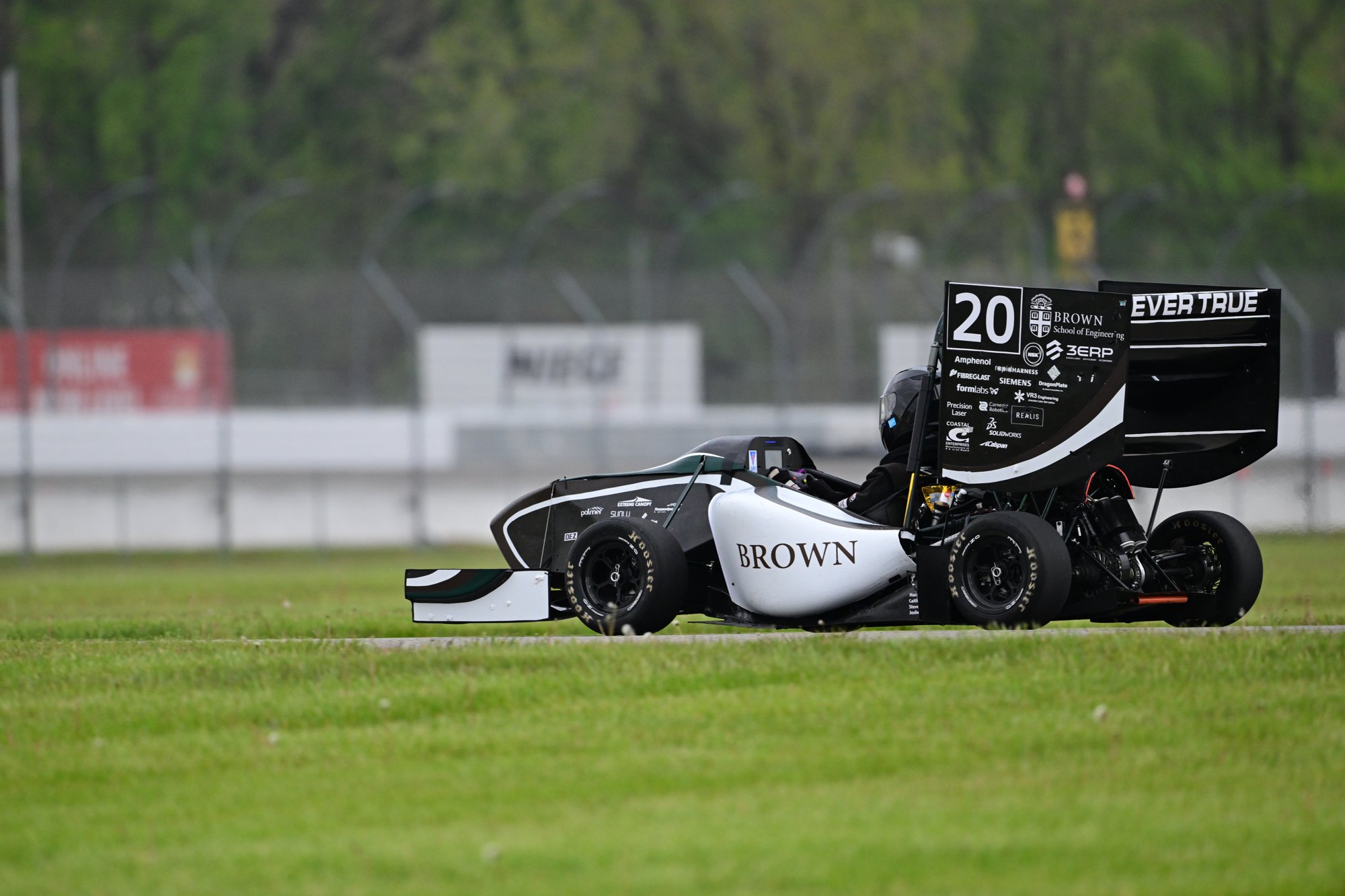
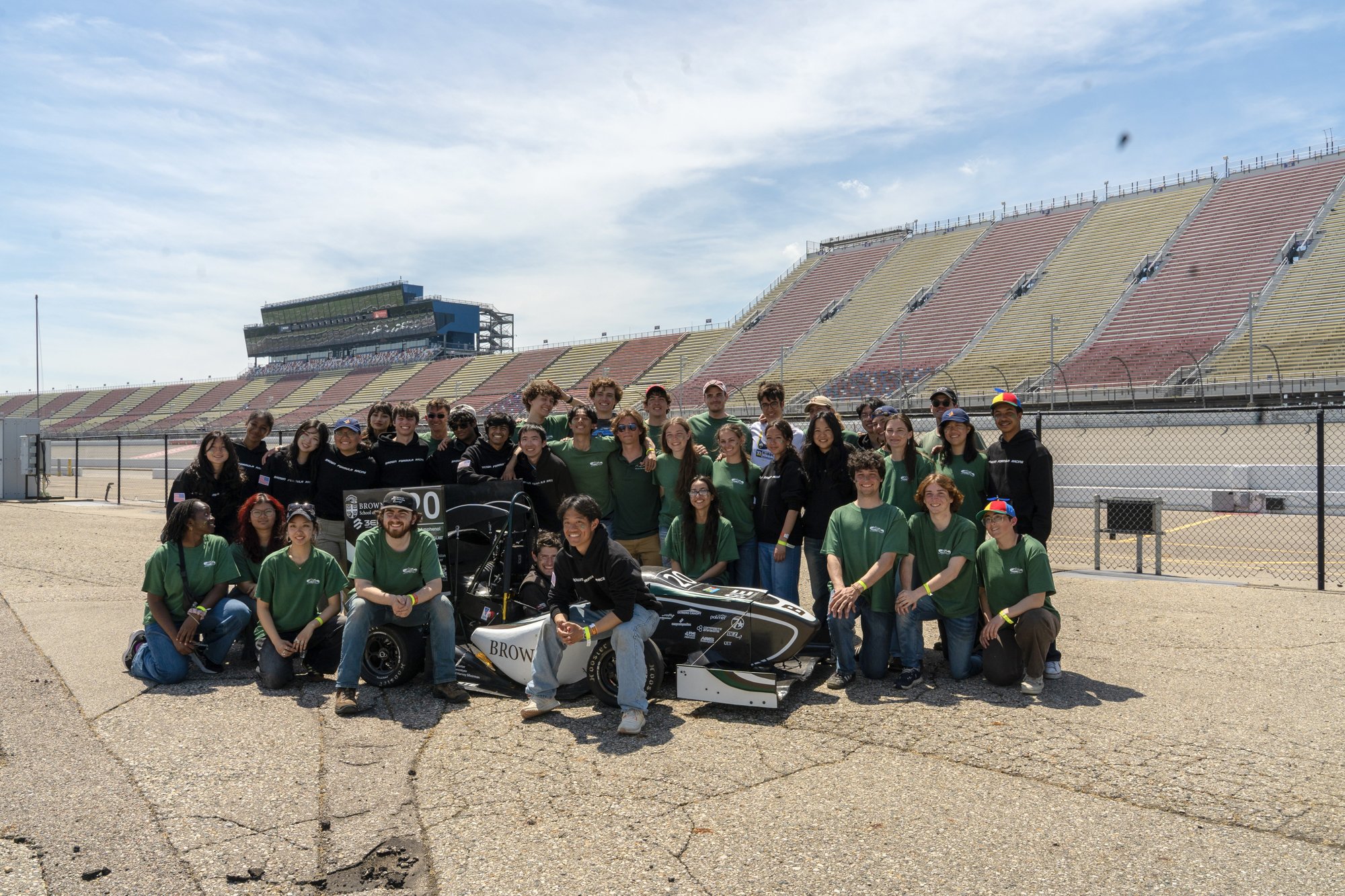
(Click on an image to enlarge)
The senior who was in charge of the pedalbox graduated in the fall and, despite me being a freshman, gave me responsibility over the pedalbox subsystem. This was not what I expected in my first year on the team.
The pedalbox, in my opinion, is one of the most overlooked subsystems on a formula-style car. Compared to subsystems like suspension and chassis, the pedalbox is a simple-enough system. However, the pedalbox is one of the few subsystems that the driver directly interacts with, so it has to feel right, and there are also so many things that can go wrong. If the throttle doesn't work, the car won't accelerate. If the brake pedal doesn't work... well, you can imagine the consequences.
Putting it Together
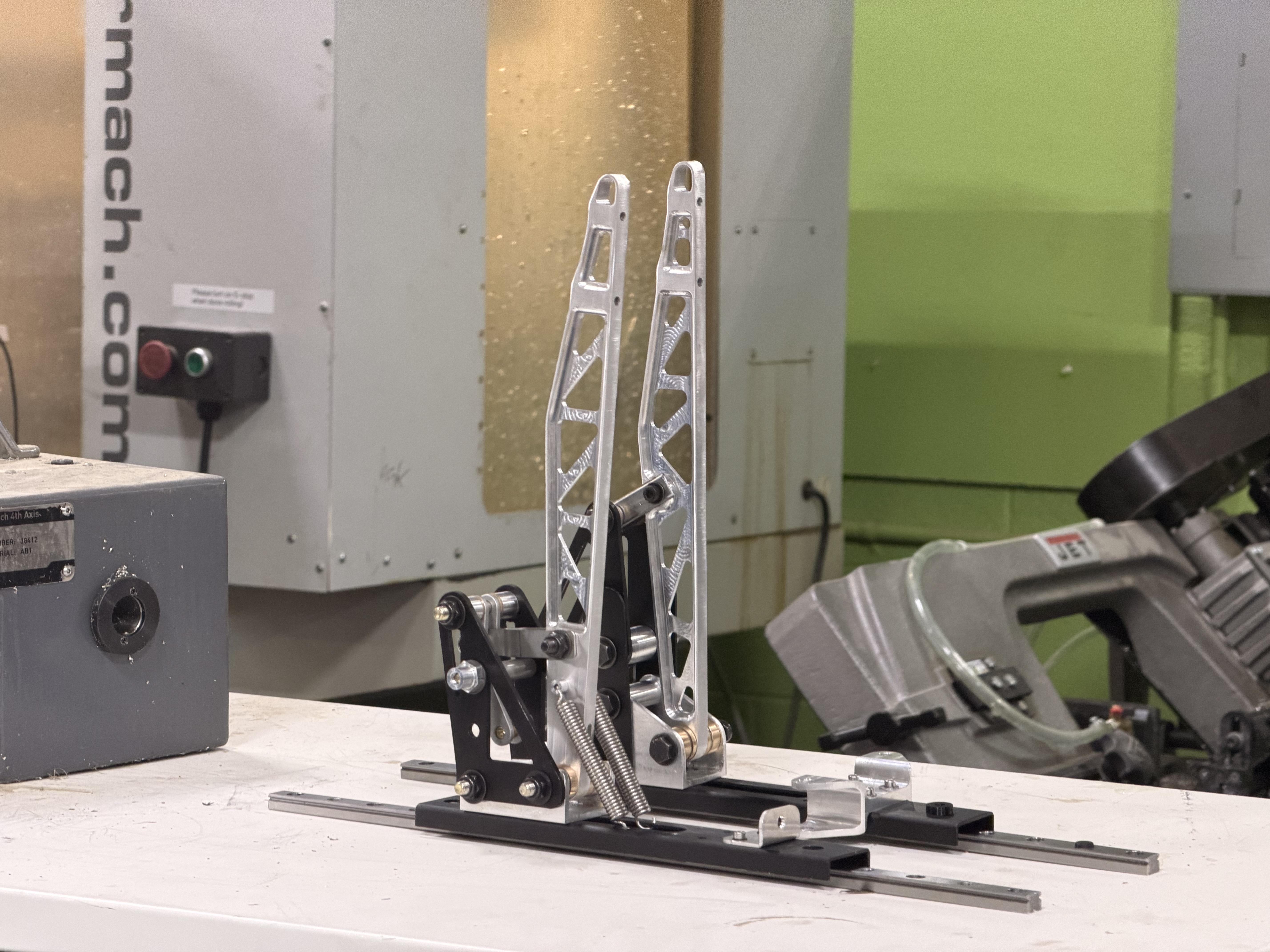
Since the senior graduated in the fall, the design was already mostly finished, and I took over the construction. The main challenge was keeping track of all the small components. In total, the pedalbox has around 57 of them, not including nuts and bolts.
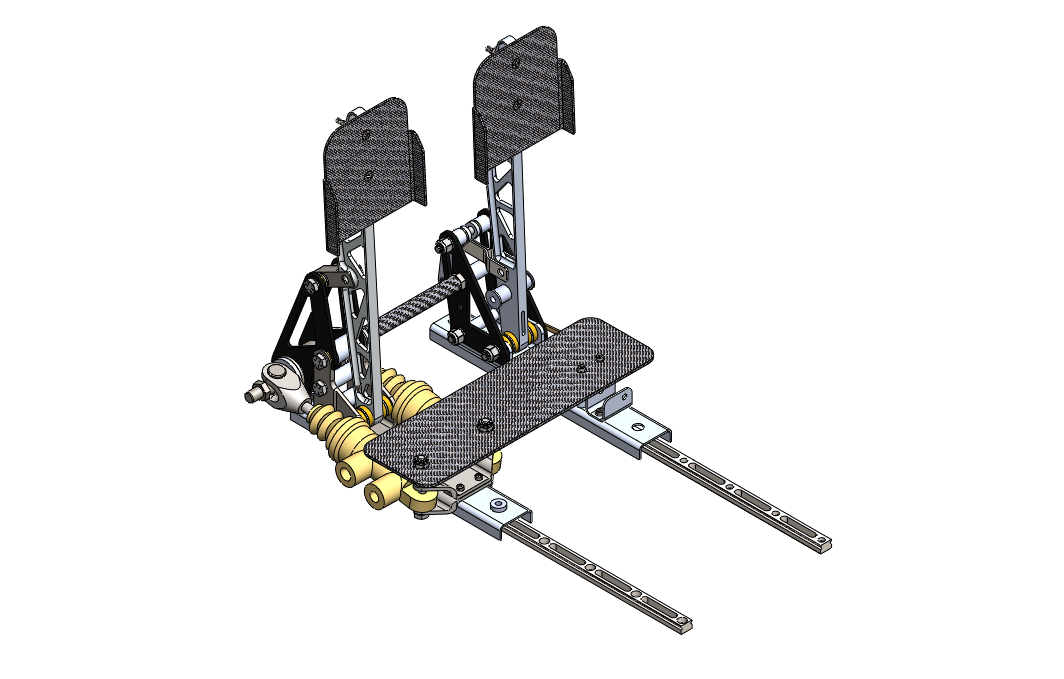
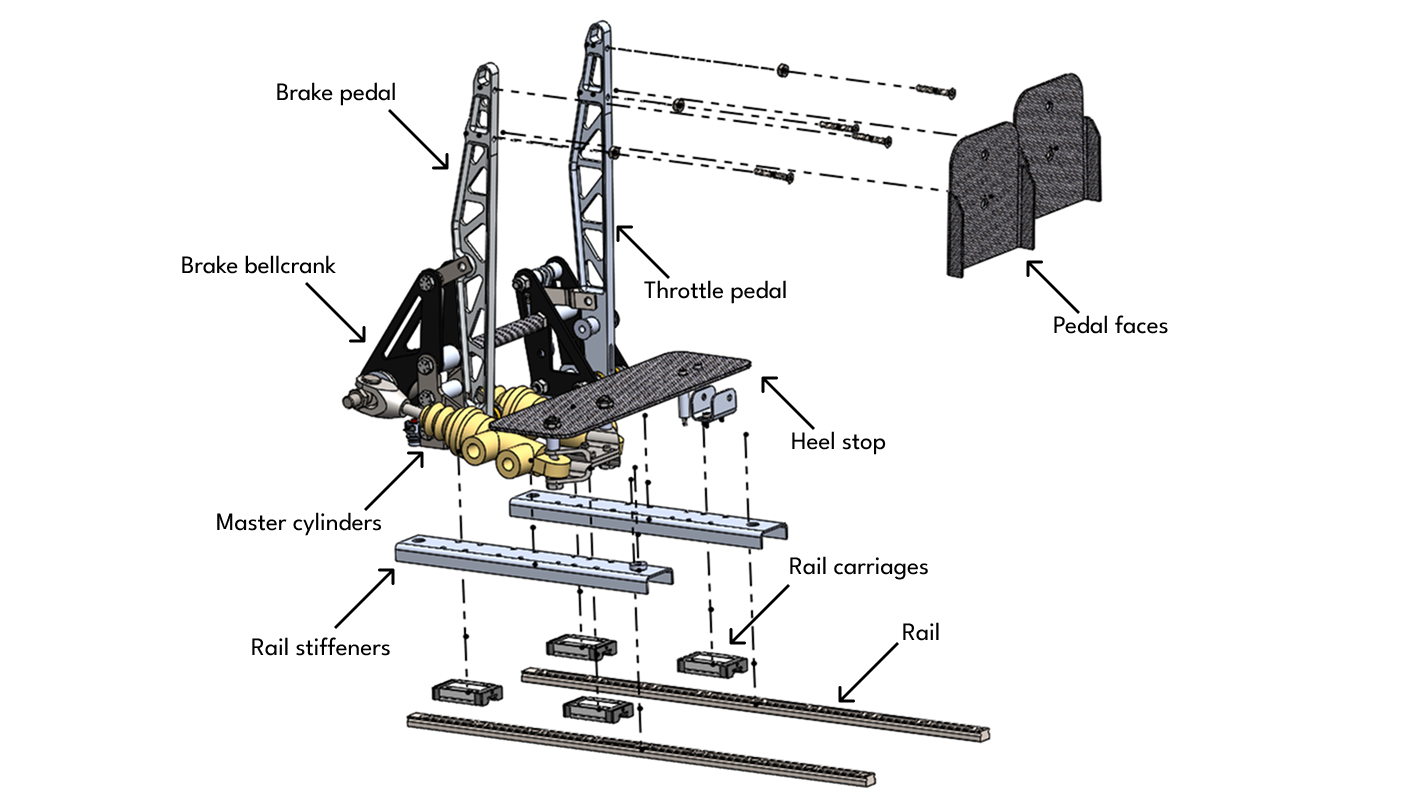
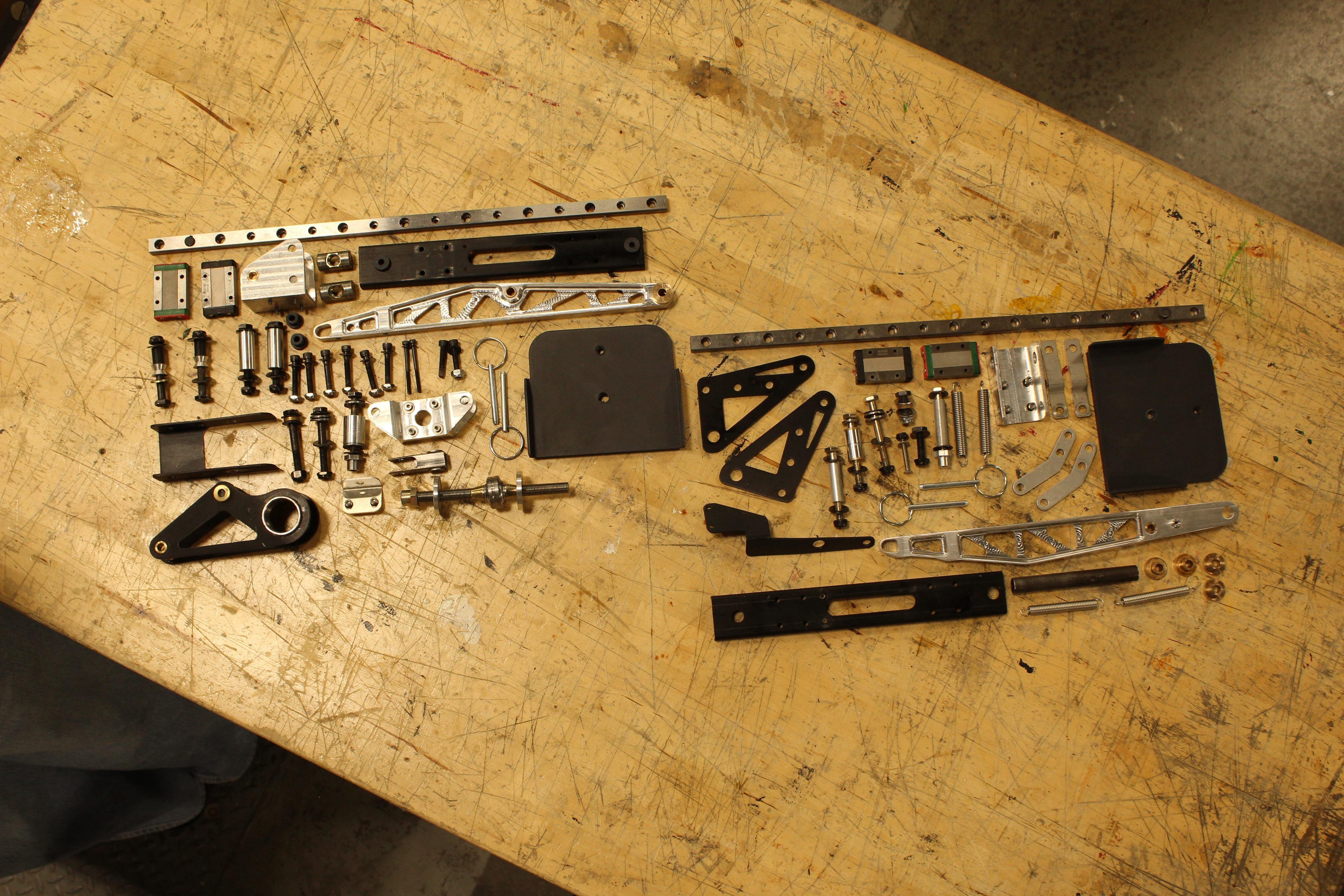
Every part of the pedalbox, before assembly.
The construction, while extremely time-consuming, was relatively simple and painless, with few issues. Some of the spacers were made to the wrong dimension, which was easily fixed by making new ones on a manual lathe.
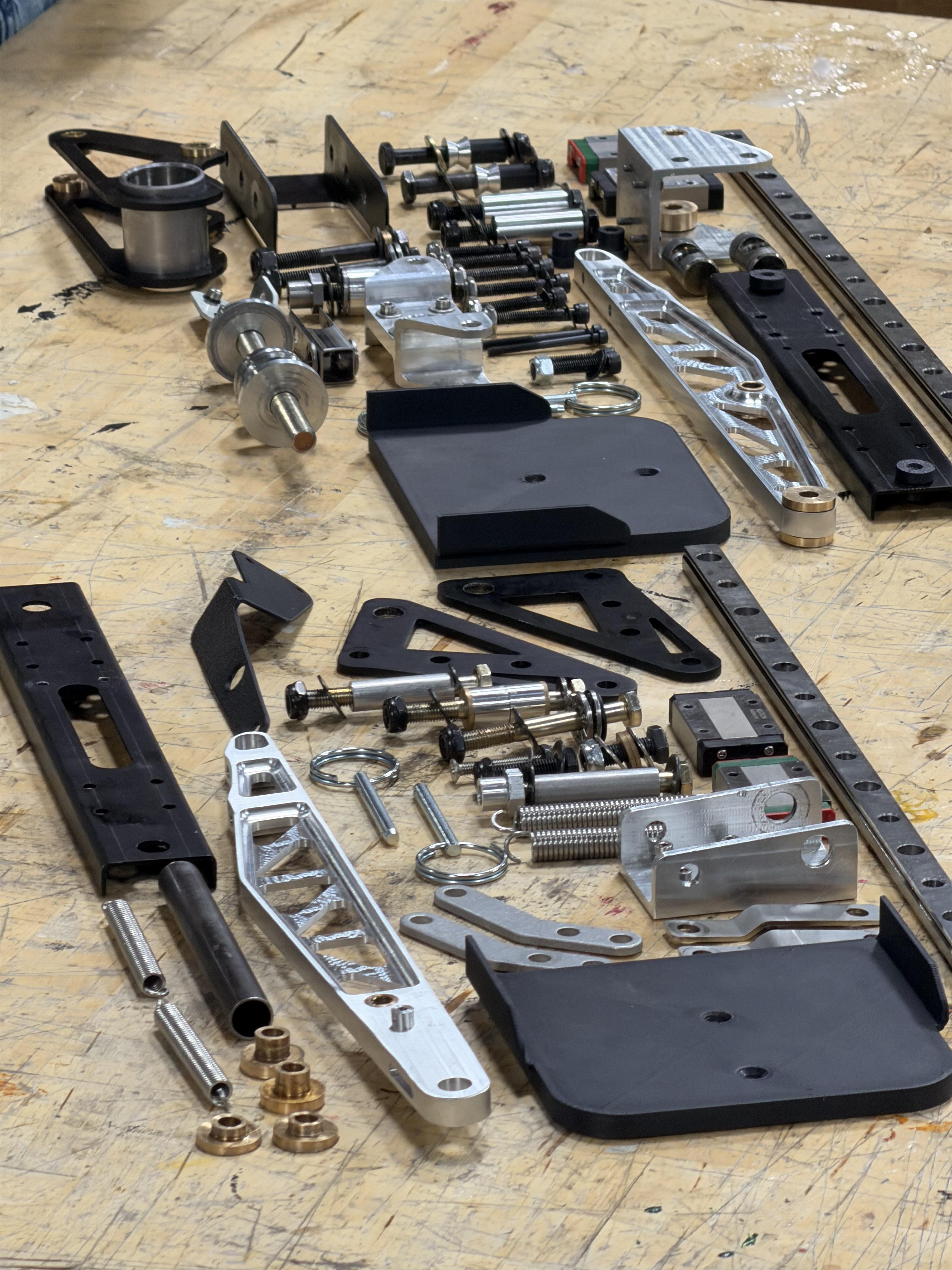
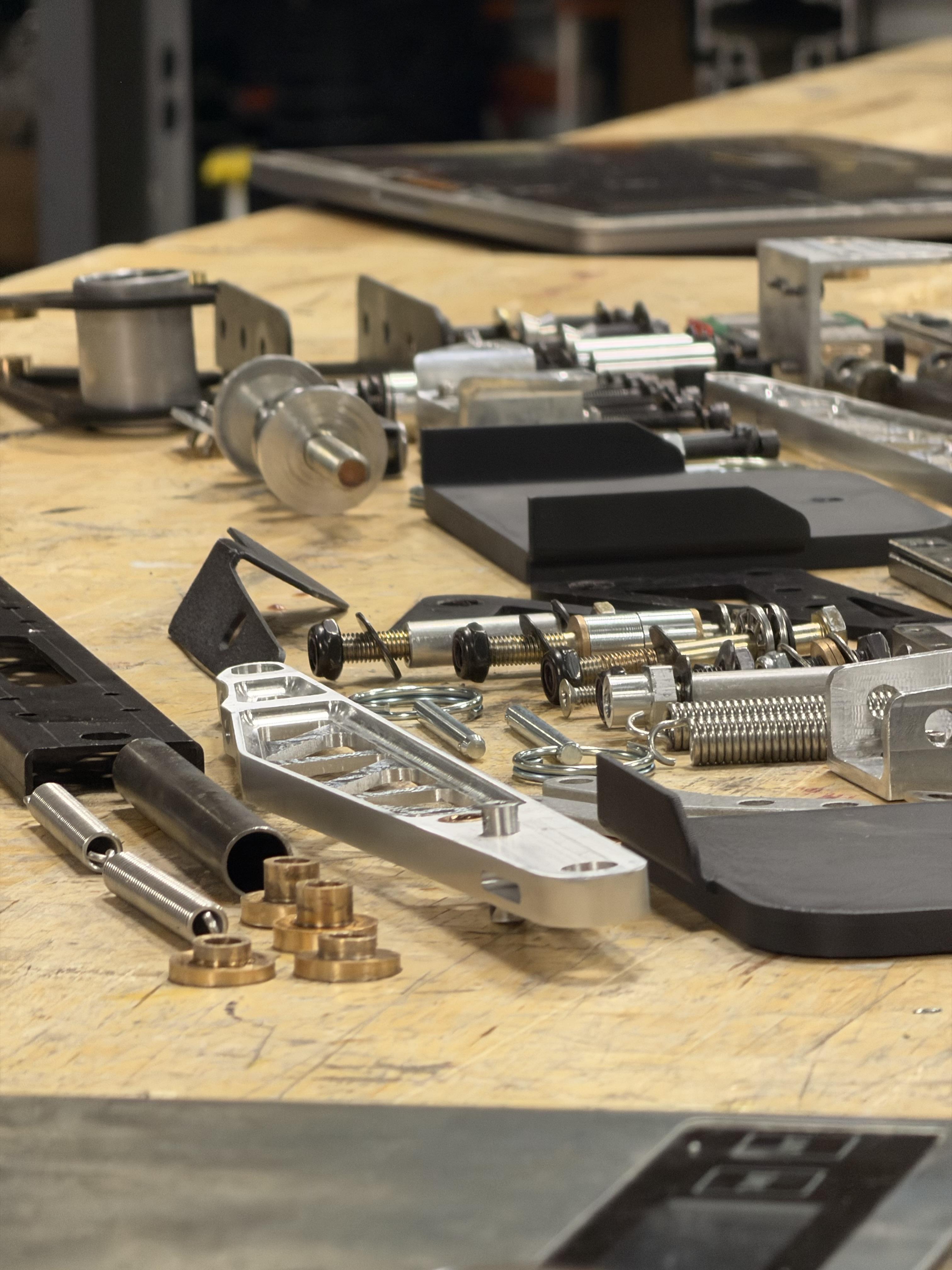
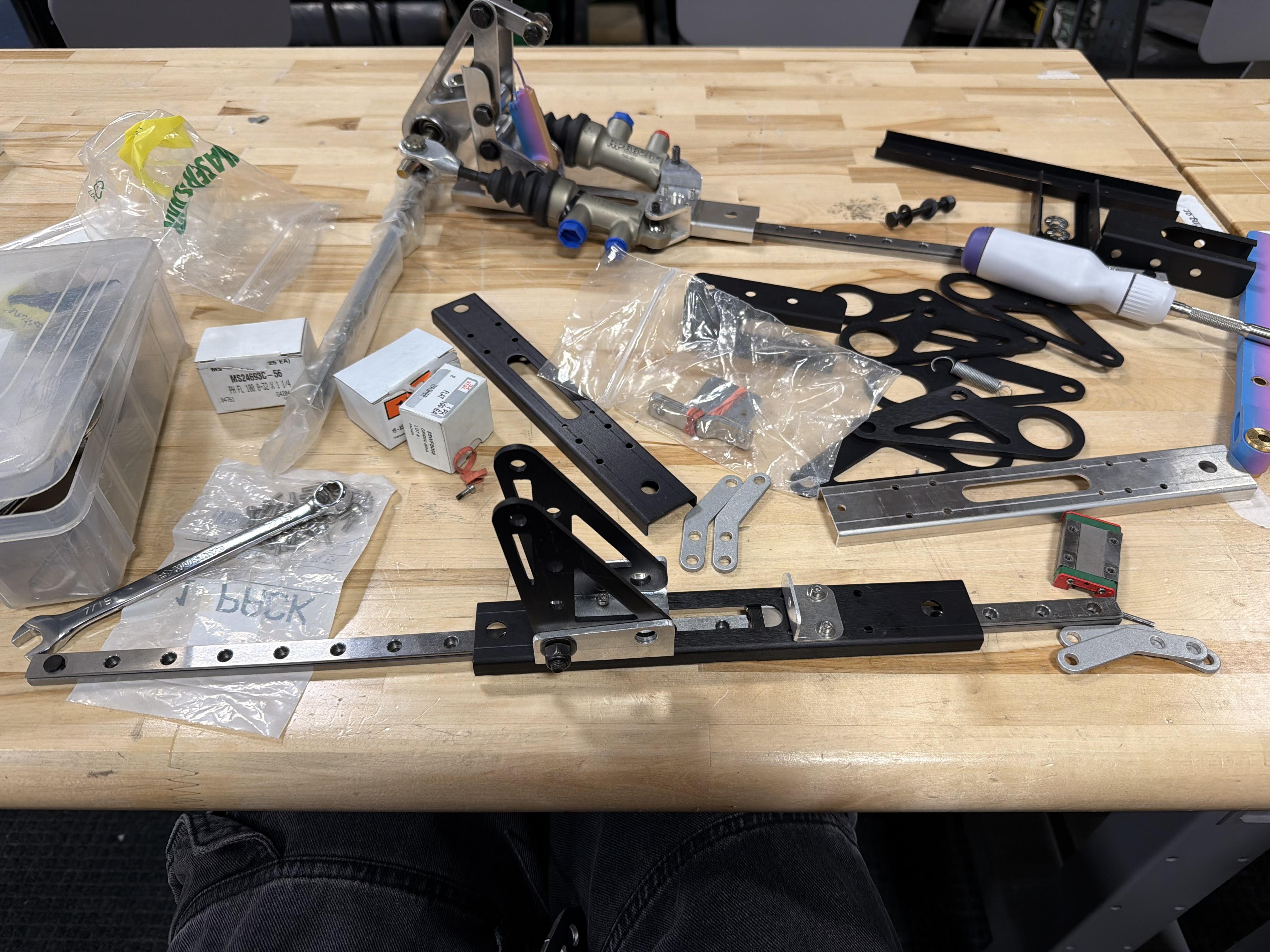
So many parts.
The Pedals
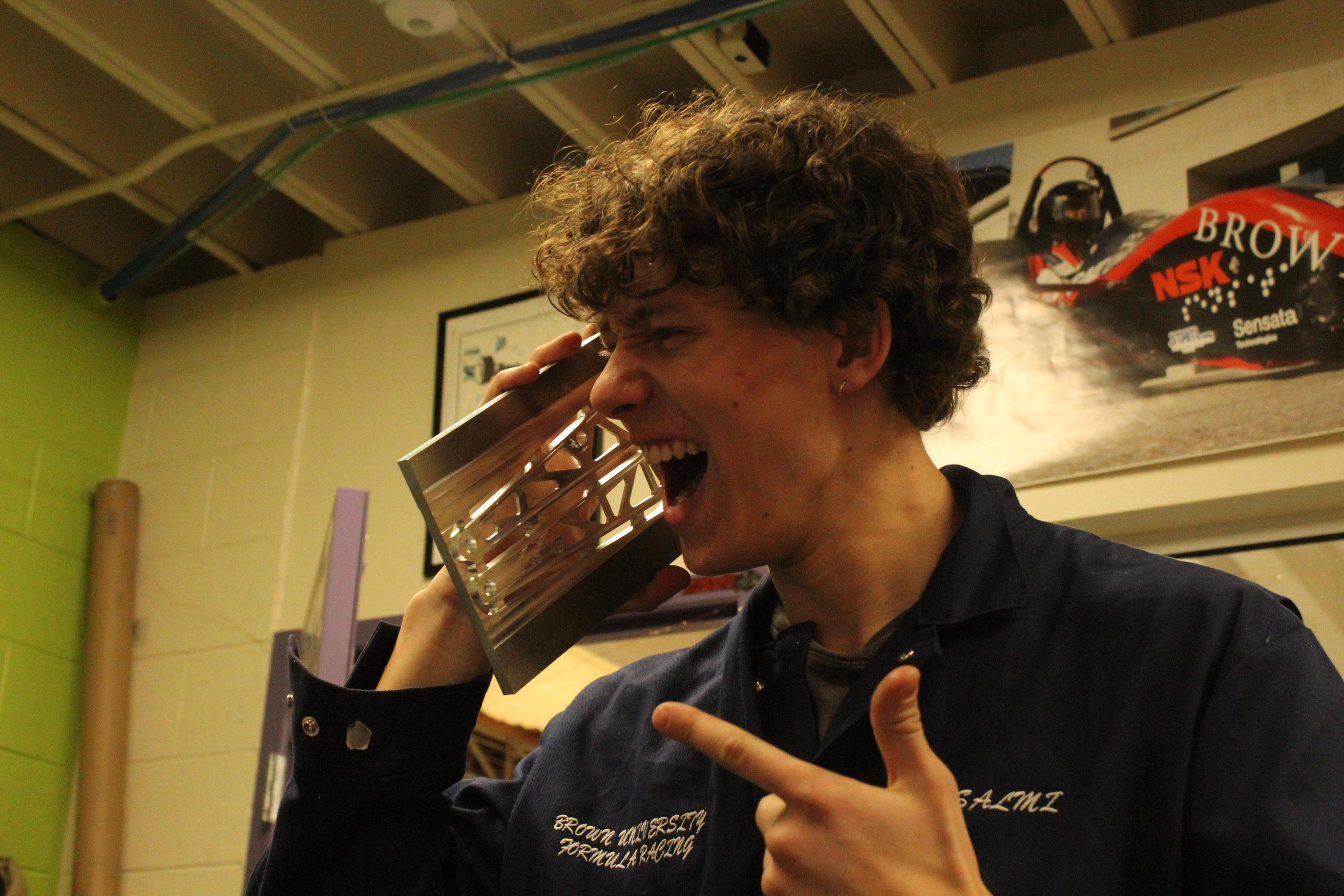
The part that I was most proud of was the pedals themselves. As part of my new-member project on the team, I reduced the weight of last year's pedals from over 216 grams to 75 grams each, while using Ansys Mechanical to make sure the brake pedal could withstand the 2000 N of force required of it.
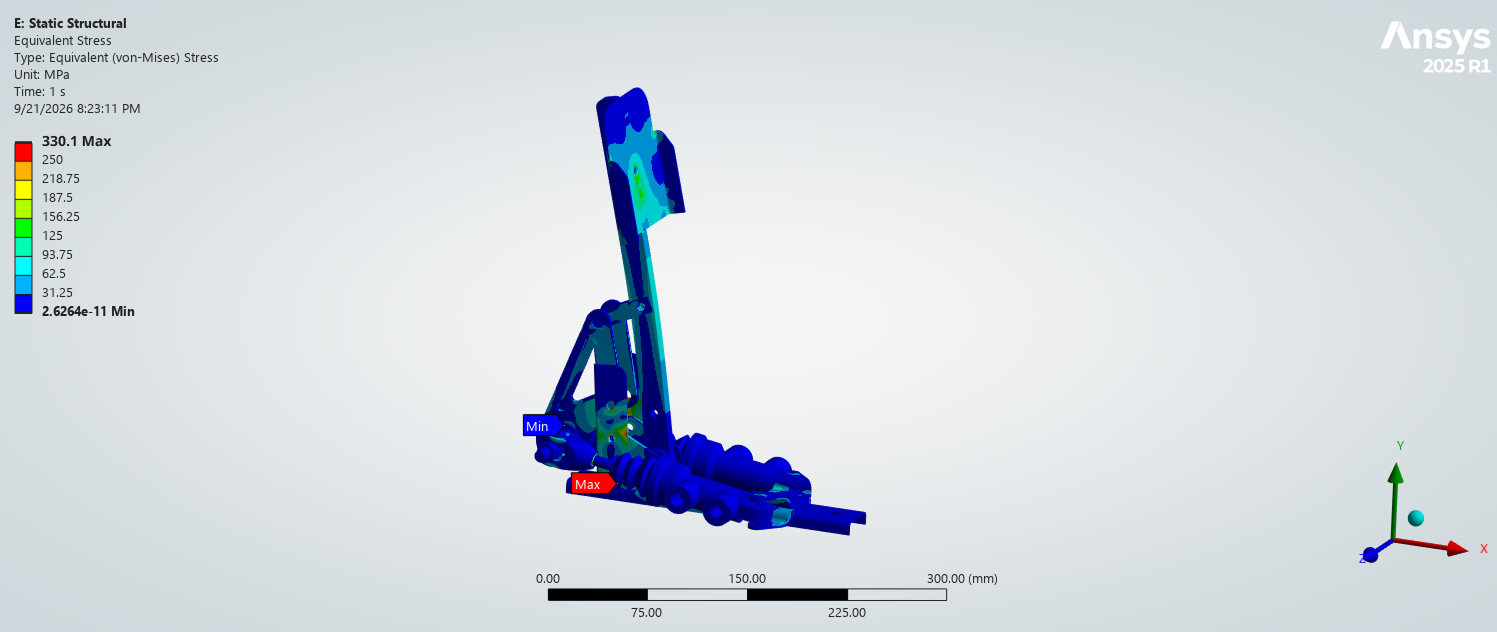
The pedals are 7075-T6 aluminum, which I machined myself on the Tormach CNC mill.
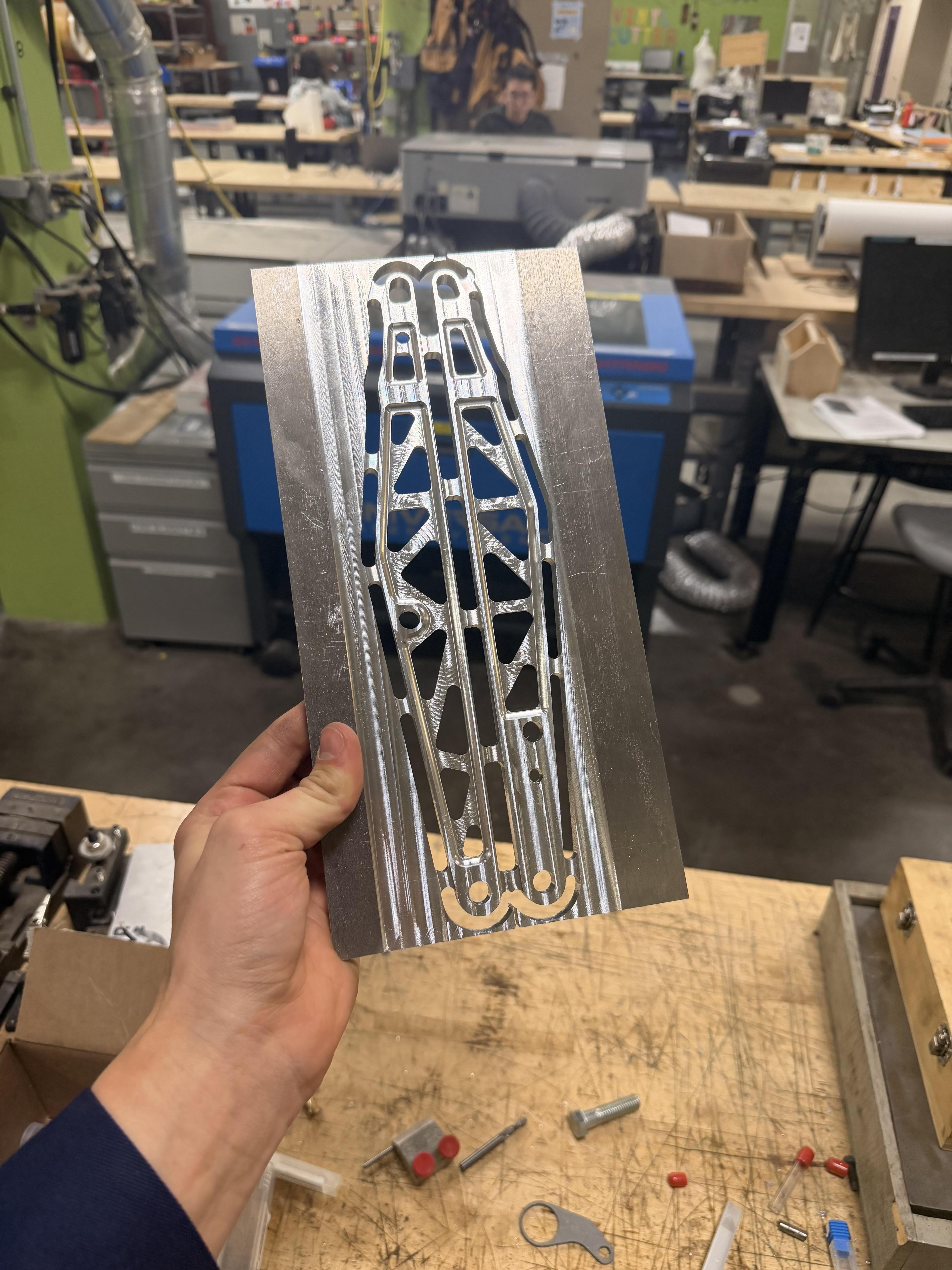
Fresh off the Tormach.
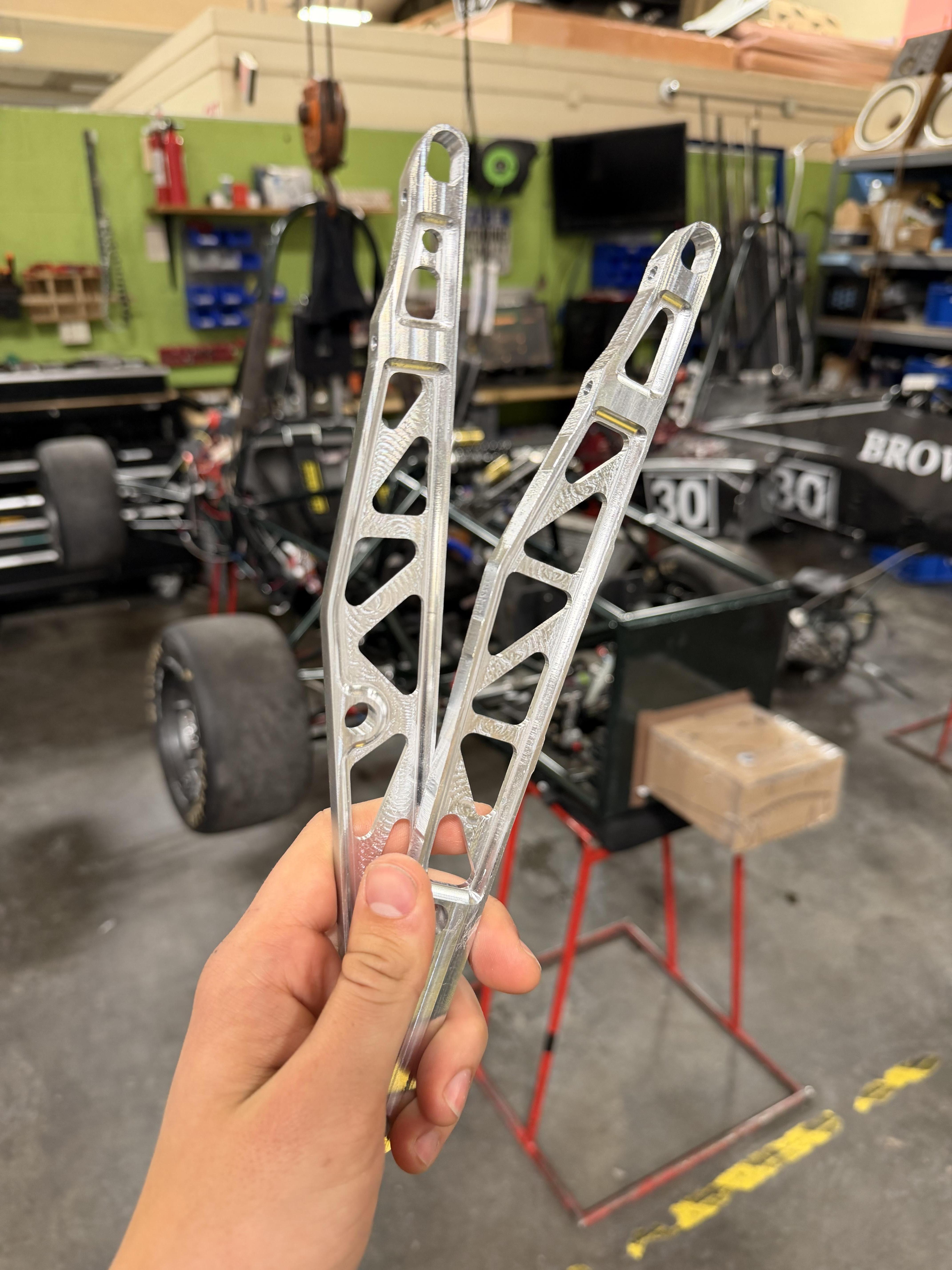
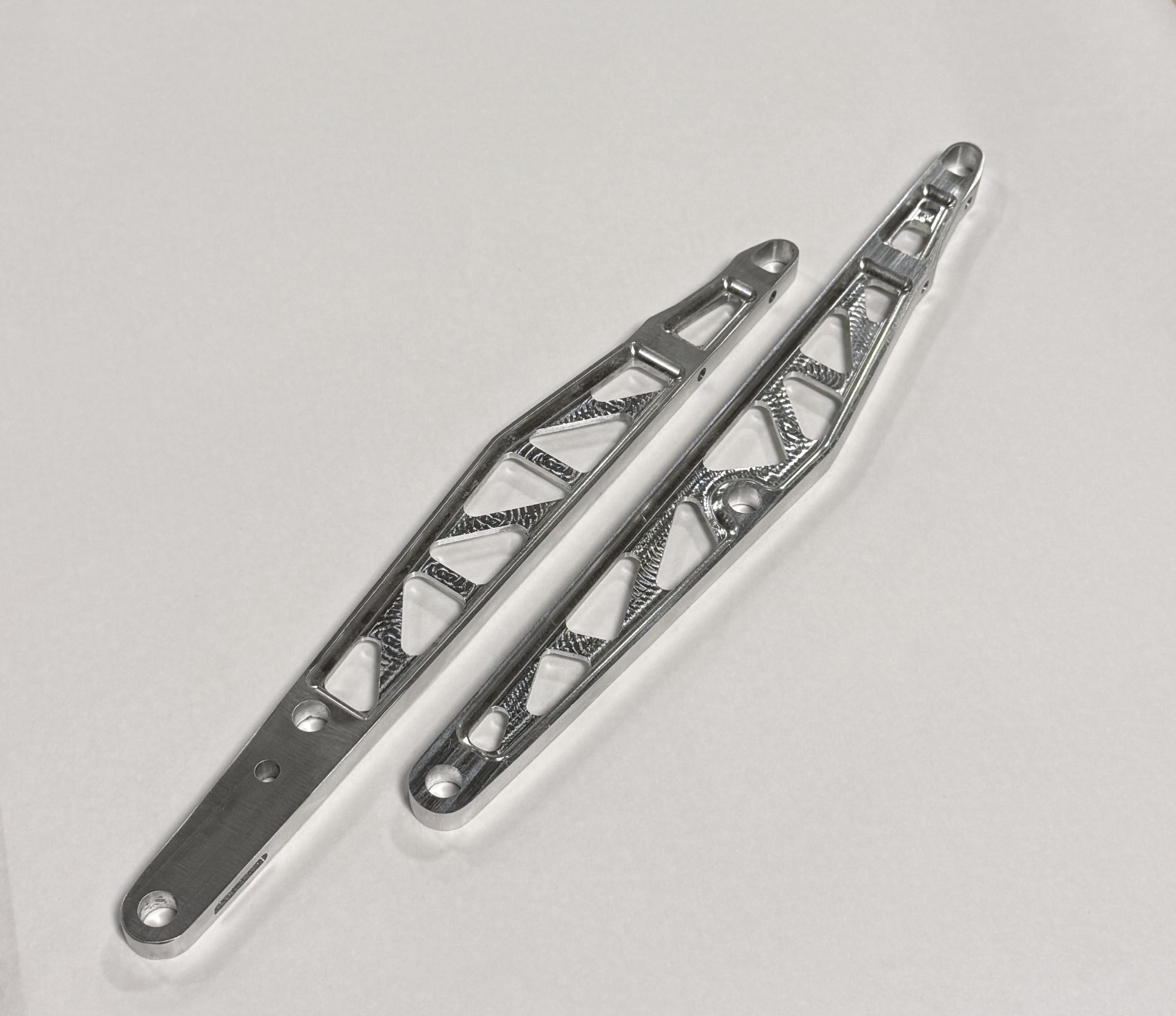
They also look pretty cool (in my opinion).
Testing
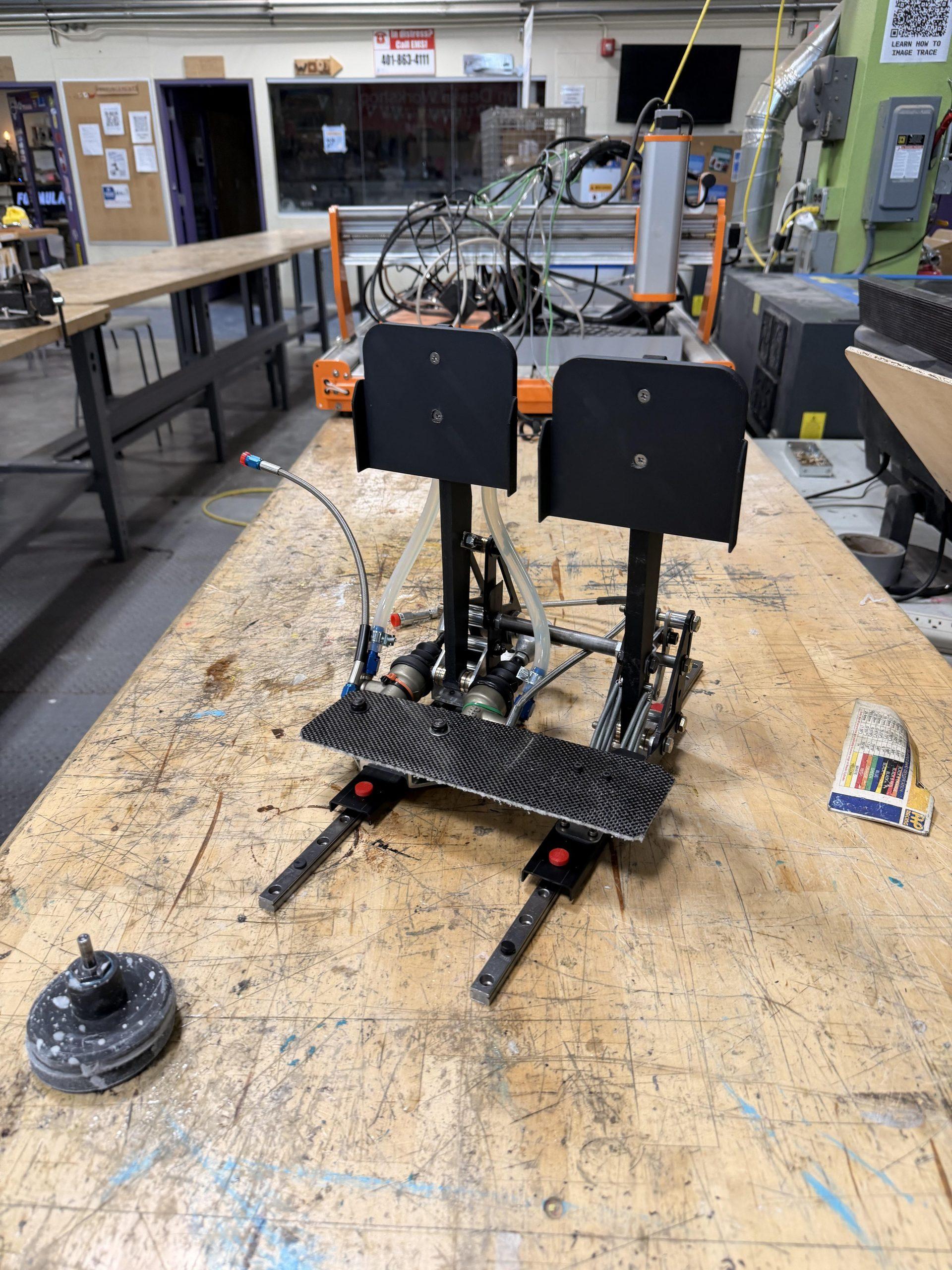
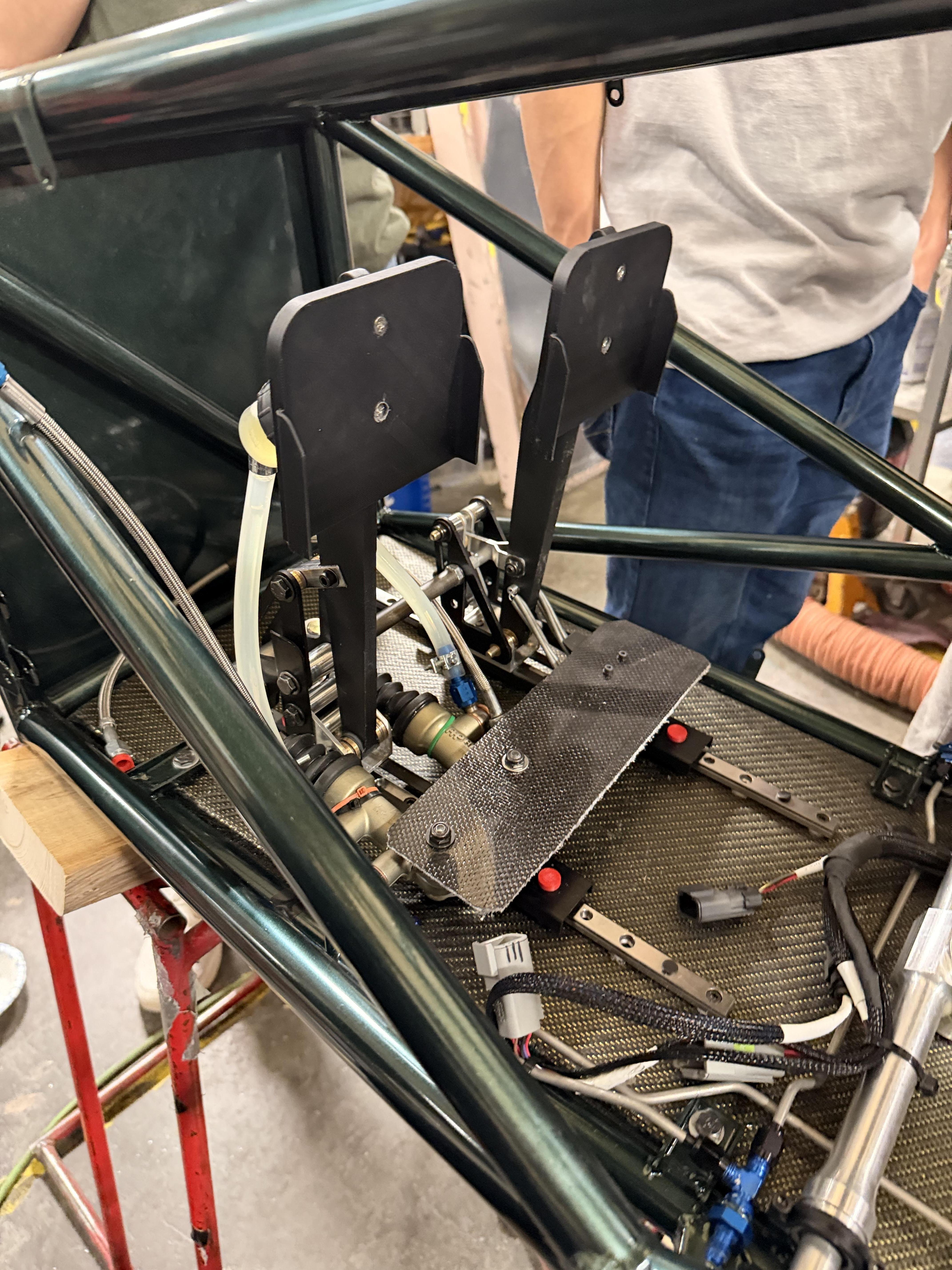
The aluminum hadn't arrived yet, so these were the temporary pedals.
The first issues came up on our second driving day in late February. The 5052 aluminum rail stiffener completely bent from the force on the rail, and took the carriage with it.
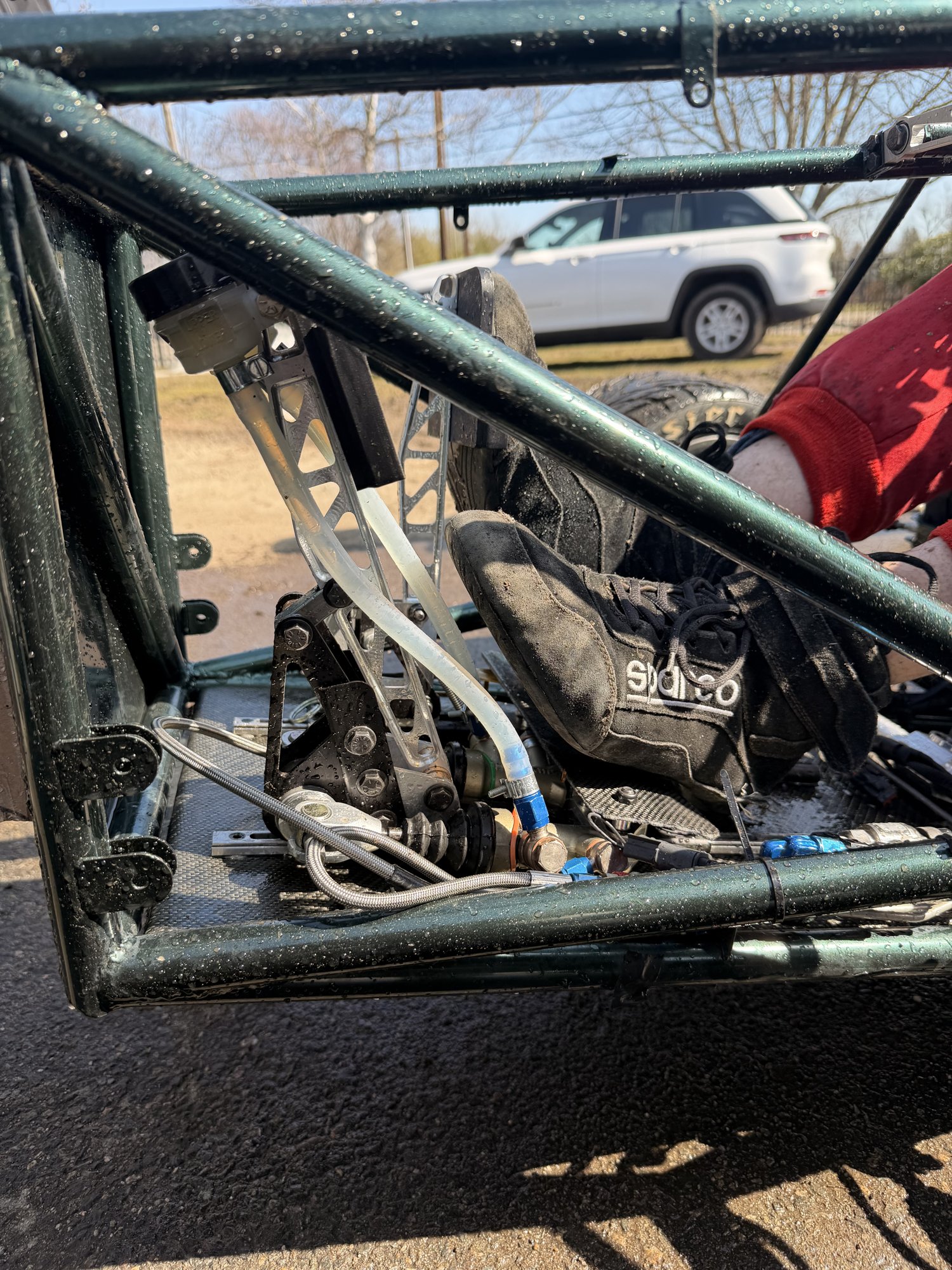
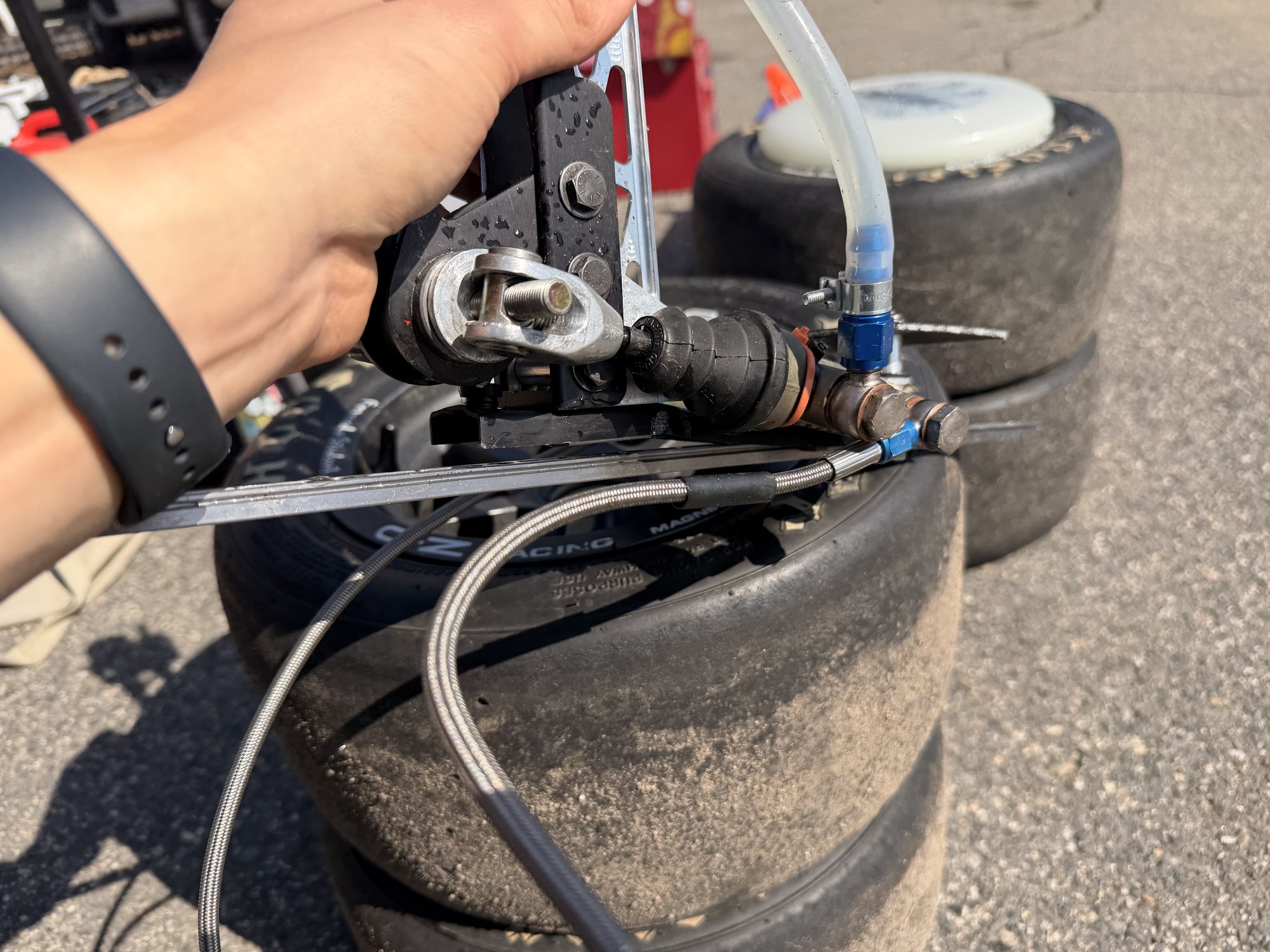
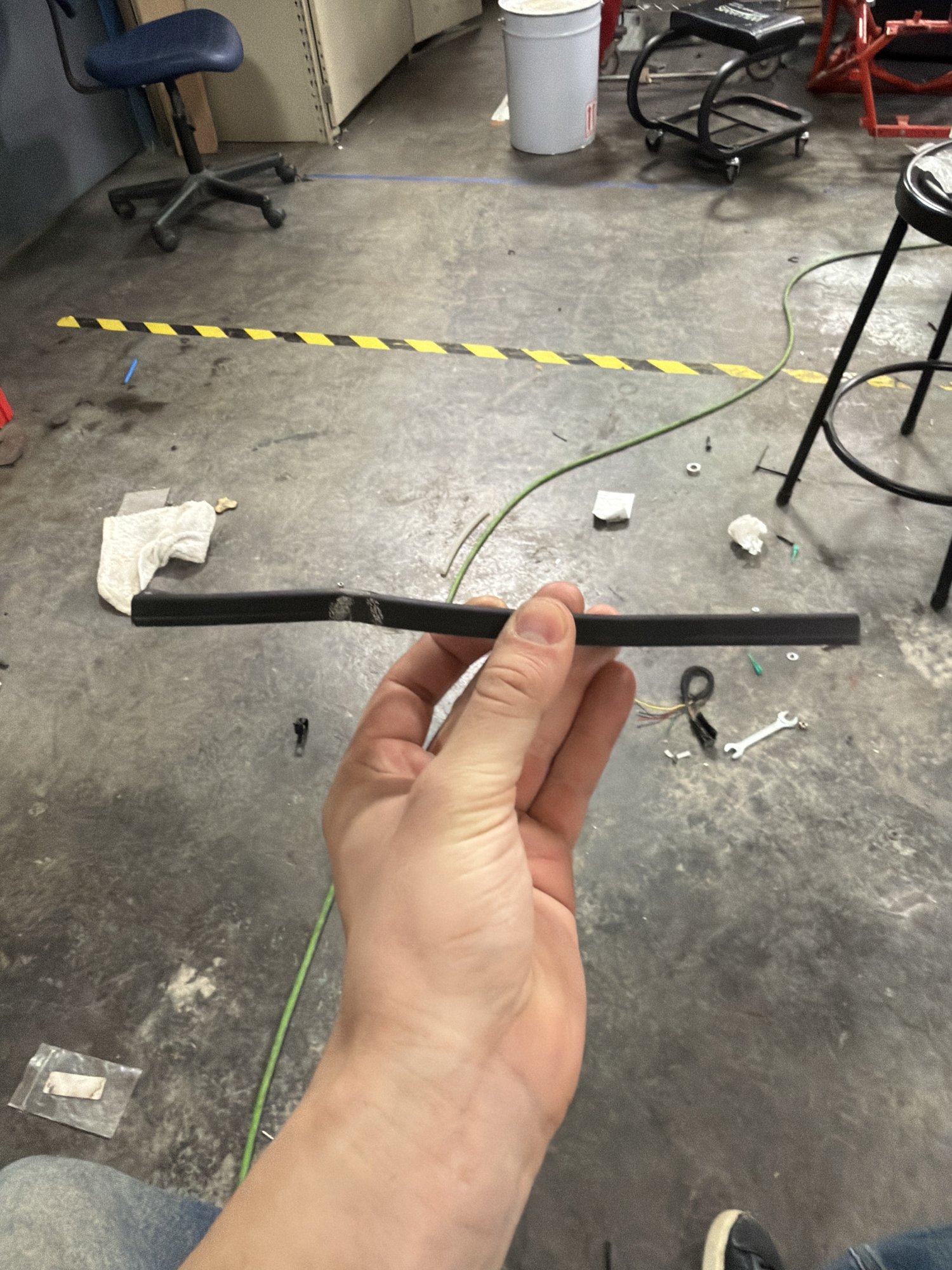
Very bad.
Maybe it just wasn't fixed properly? I put on the spare rail and the exact same thing happened.
I learned a very good lesson that day. If you are responsible for a subsystem or a design, you should understand how it works, even if you weren't the one who designed it. The Ansys Mechanical analysis that was done on the stiffener wasn't done properly, and I hadn't checked it.
My first fix was to add another rail stiffener. That also bent, so as a last resort I replaced it with a stainless steel stiffener. I didn't want to do this because stainless steel is expensive, but at that point there wasn't much of a choice. I also designed in stiffer springs, since again, good driver feel is very important for a pedalbox.
Once the new stiffener arrived, it held up for the rest of testing season. And hopefully it will hold up for competition as well.
I then moved on to designing a proper heel cup, replacing the flat piece of carbon fiber I had made with one molded to the shape of the heel. Again, prioritizing driver comfort.
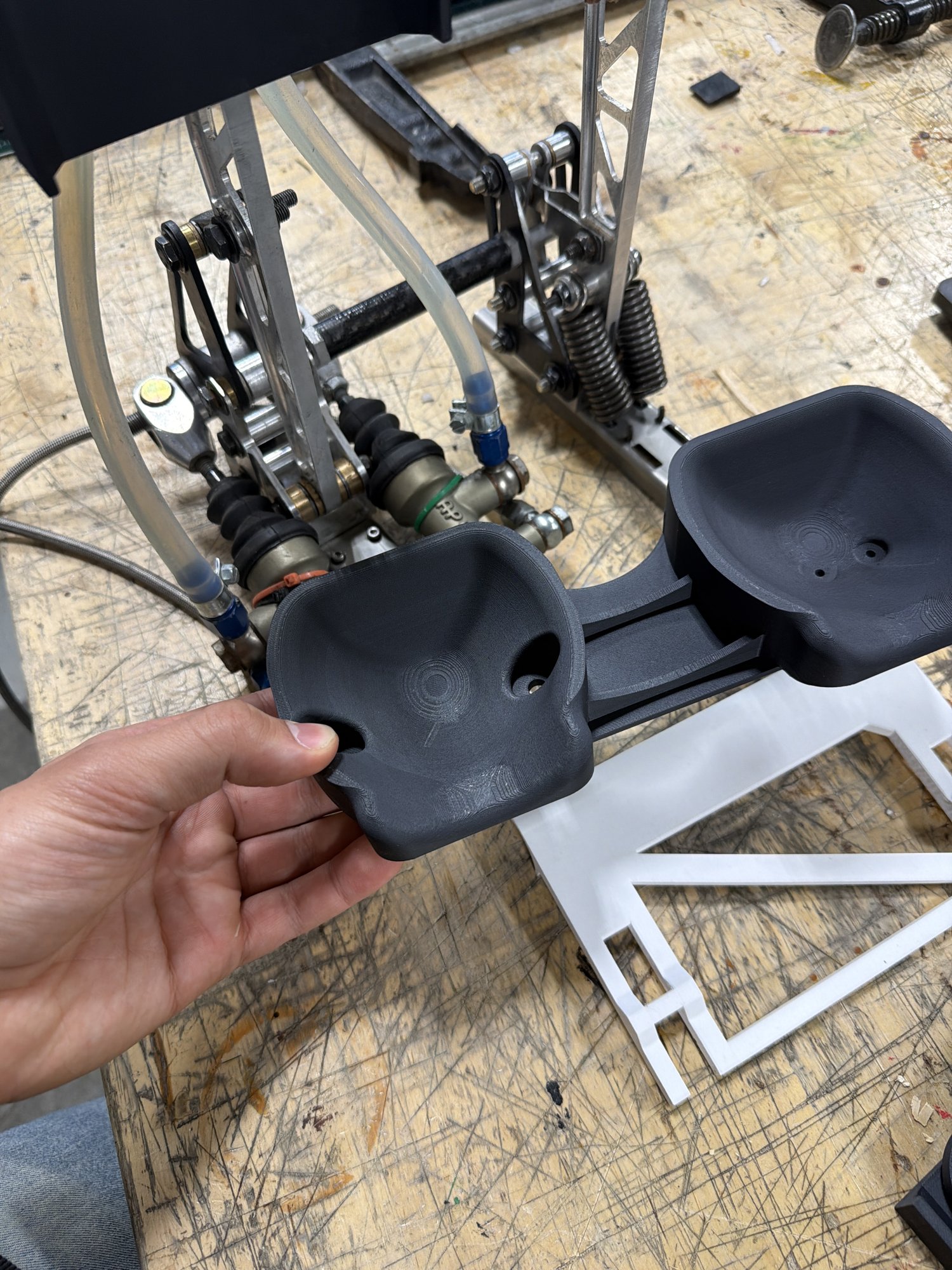
With these modifications, we were off to competition in Michigan against over 120 other universities.
Competition
Competition is laid out over multiple days. The first major hurdle is passing Tech, where inspectors go around the car to make sure your design follows the rules. Thankfully, the pedalbox had no issues besides needing a cable tie to secure the throttle cable.
The next day we had Design, where a panel of judges question your design and the choices you made.
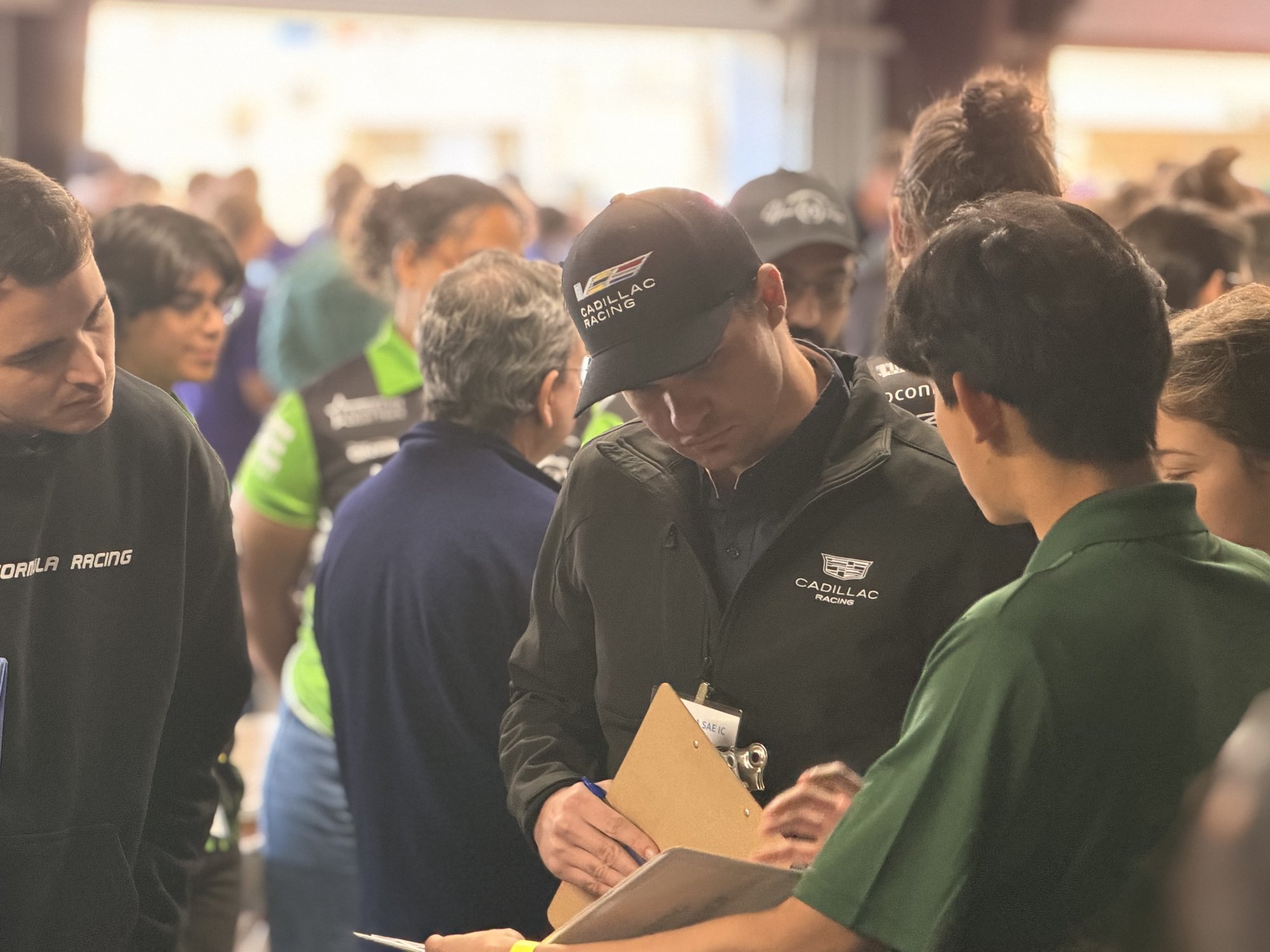
The judge covering driver interface didn't ask too many questions about the pedalbox, and we scored 11 out of 15 for driver interface, which is quite good. The chassis judge did point out that the brake pedals didn't have much torsional rigidity. While I had specced the pedals to withstand 2000 N on the face of the pedal, I hadn't done much analysis of what happens when the load isn't axial.
Issues came up when we moved on to the rest of the technical checks, such as tilting the car to make sure there are no leaks, staying under the maximum noise limit, and… passing the brake test.
In the brake test, they have you accelerate and then slam on the brakes, while a group of around six people watch the wheels to see if they lock. All four tires have to lock at the same time for you to pass. Most teams pass brakes in the first few tries.
While I wasn't responsible for the brakes themselves, I was responsible for how they were actuated. We ended up passing brakes after 14 attempts, with a lot of those attempts locking 3 of the 4 wheels.
When we finally passed, the brake subsystem lead and I were very relieved and glad that it was behind us… (subtle foreshadowing)
The next day we did the fun dynamic events, where we competed against the other teams. We got an excellent time in acceleration, did well in autocross and skidpad, and were heading to the practice track to get ready for endurance, the final and arguably most exciting event of the competition.
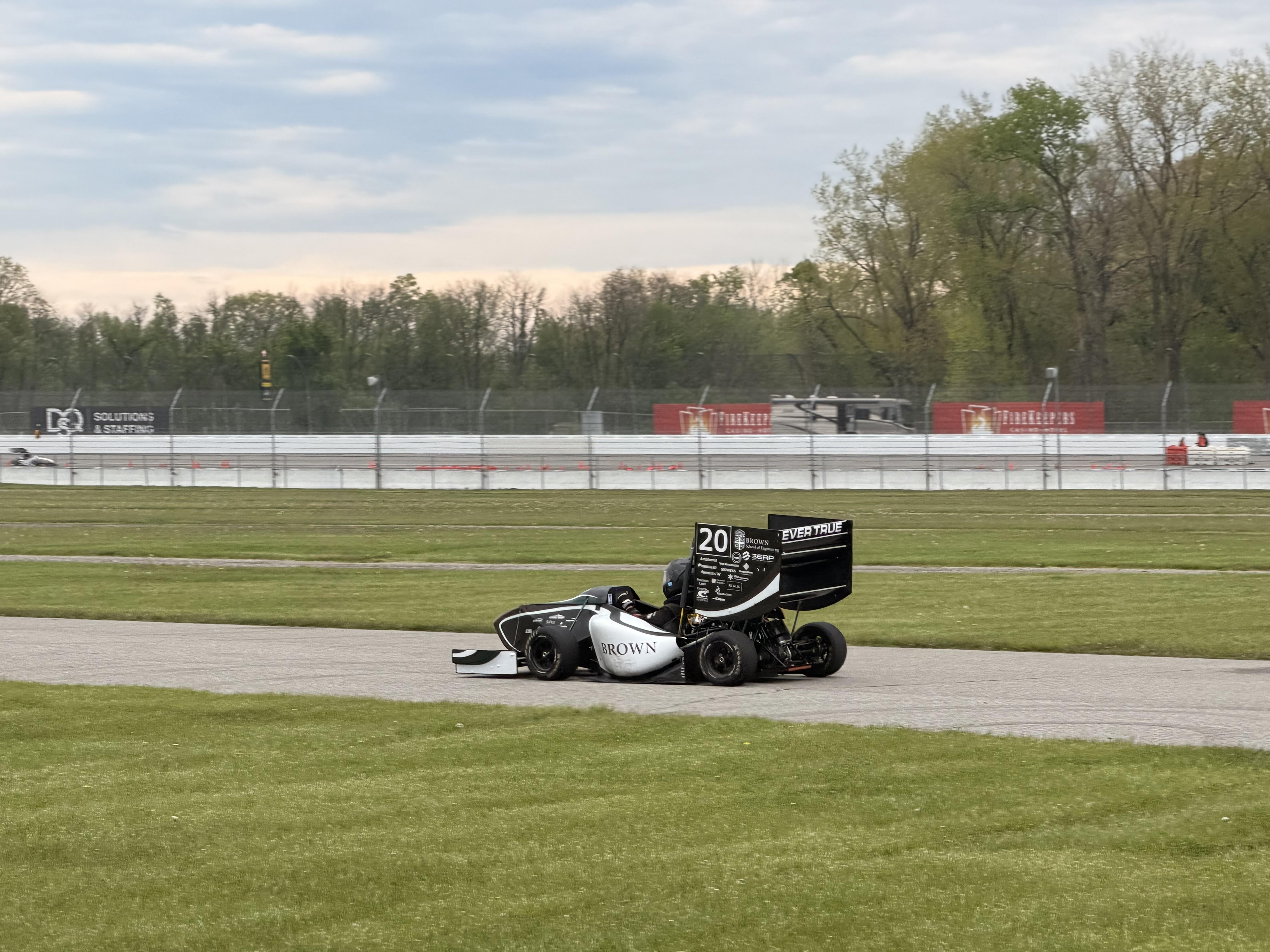
On the way to the track I was called over. "Hey, Aksel? The pedals aren't moving."
I thought it was no big deal. The pedalbox was designed to be adjusted for different driver heights, and it sometimes took a bit of force to move the carriages. Long story short, we spent 30 minutes trying to move the rails, which involved pulling on them with all our force and even hammering them.
This is where the major design issue of the pedalbox was revealed: it was an absolute pain to assemble and disassemble. The biggest flaw was that the rails couldn't be removed from the carbon floor unless you could move the rail stiffener, since some of the bolts were underneath it where an Allen key couldn't reach. This made it almost impossible to take apart the pedalbox in a hurry, which is exactly what we needed to do.
So the only solution was to have four people lift the car as we dropped the floor from the chassis and looked at the rails from the side. The stainless steel stiffener hadn't worked as I had hoped. It had bent, which made the carriage hard to move, and the rail itself had fractured completely.
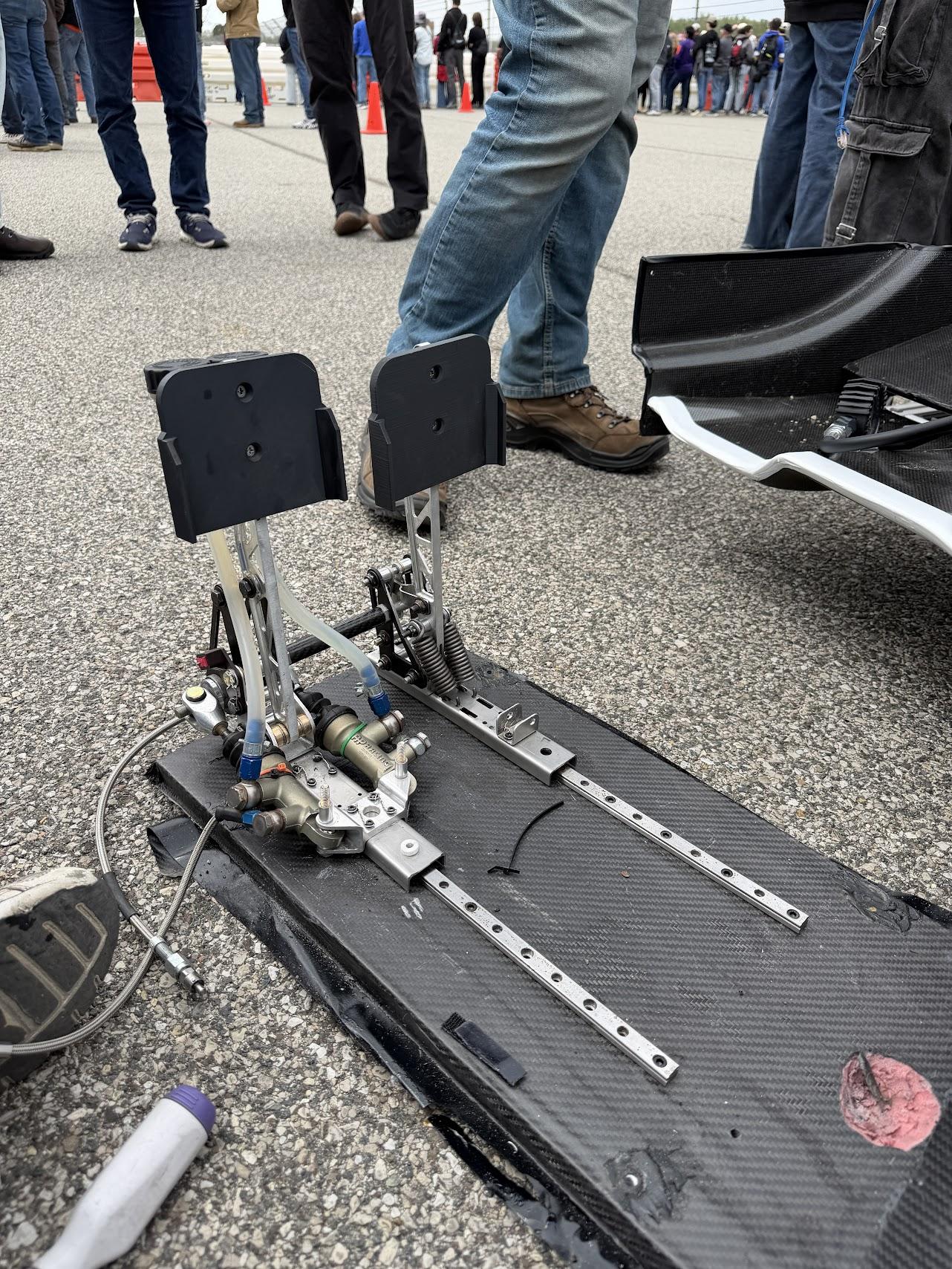
The pedalbox pulled out of the car.
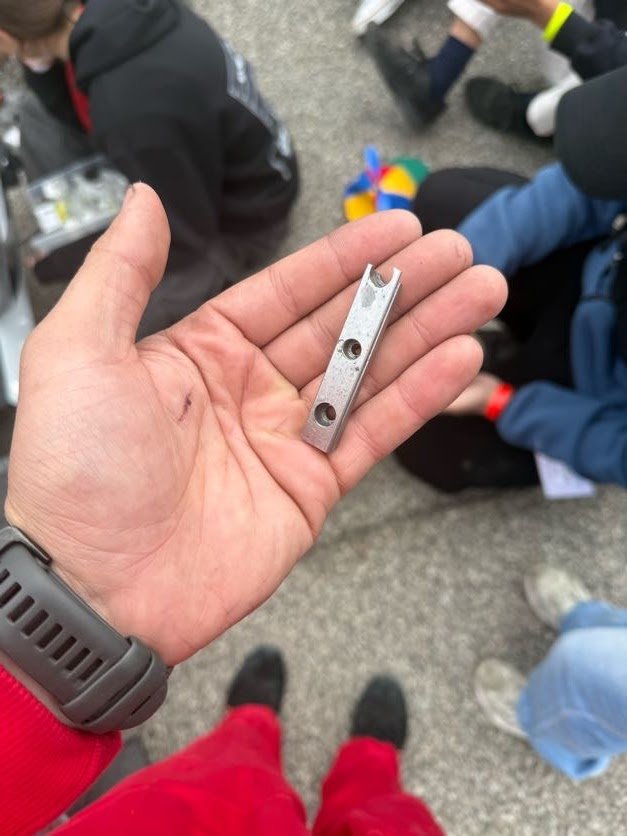
A piece of the fractured rail.
With competition closing for the night in an hour and a half, I had to fix the issue and set the pedals in a position that worked for the endurance drivers. The pedalbox usually takes at least an hour to take apart and put back together, but the stress pushed me to do it in 30 minutes. That meant giving up the pedalbox's (admittedly already poor) ability to slide, and locking it in one position for endurance the next day.
In the end, the pedalbox survived endurance.
Looking Back
I've been told that the issues weren't really my fault, since I wasn't the one who designed the original pedalbox, and that as a freshman nobody expected me to take responsibility for it in the first place. I still feel responsible for the issues.
This year I'm the suspension lead, and I've already taken what I learned from the pedalbox when designing the new suspension. I want to understand every part of the subsystem, including the parts that other members are designing, and double check their analysis and ask them to check my own, just in case one of us overlooked a load case. I've also made an effort to design things that are easier to take apart, because at some point you will have to do it in a hurry.